I was inspired by a post that Peter Parker (of Melbourne on Transit) wrote on January 2026 discussing the introduction of the new Youth myki, a concession that gives passengers under the age of 18 free travel.
Closer to the end of the article, Parker displays a simple graphic explaining the concession system within Victoria, however it misses quite a lot about the nitty-gritty about the rules behind these concessions.
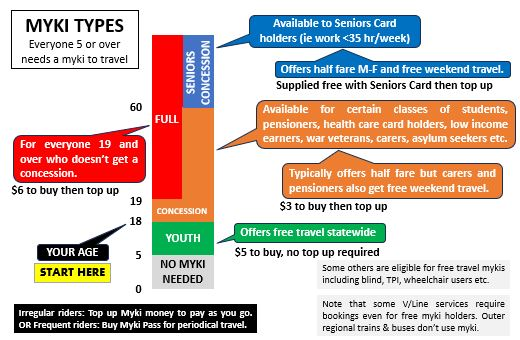
To outline the true horror of how concessions work in Victoria, I ended up making a flowchart graphic, to get closer to how myki cards really work in this state.
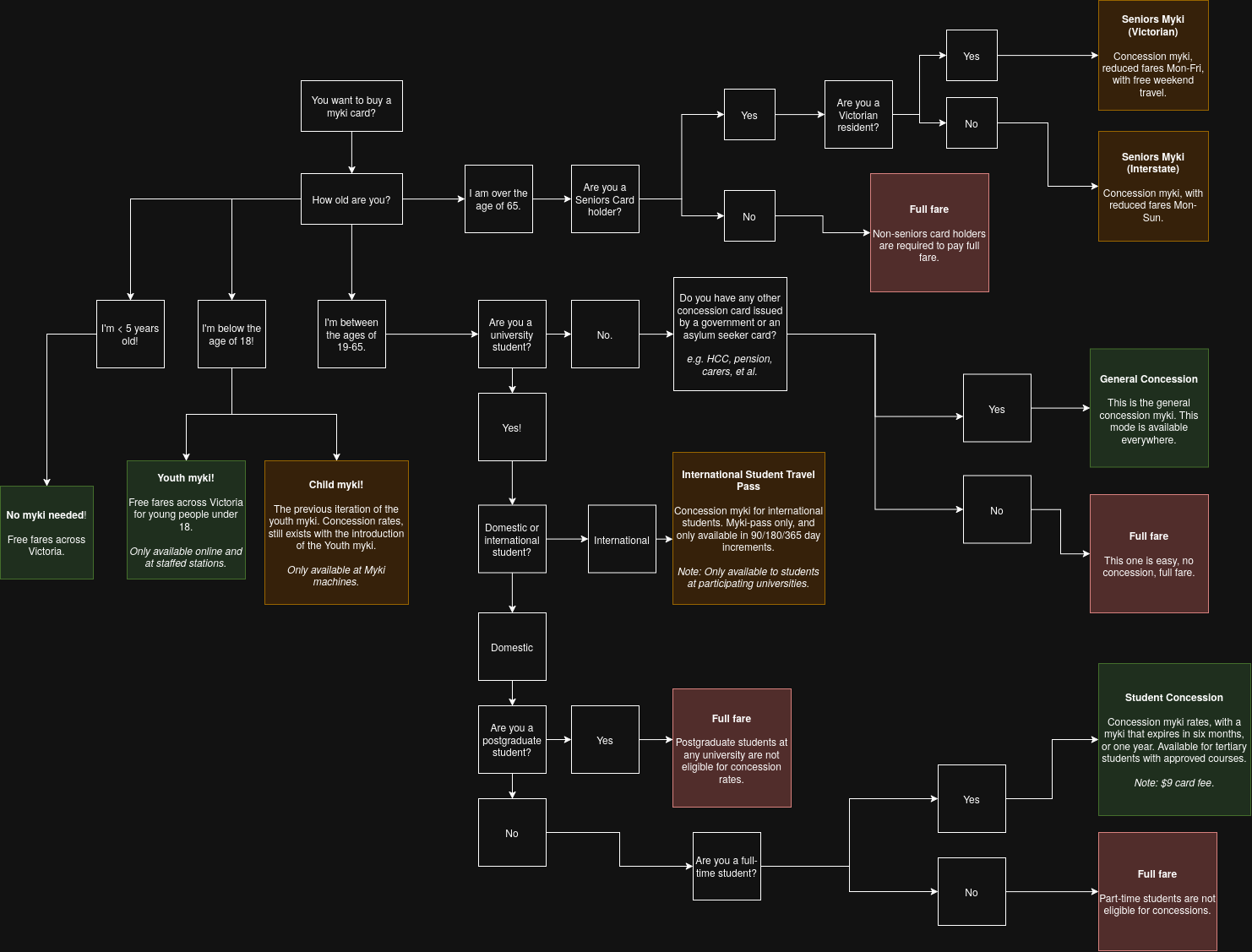
This flowchart is designed as a set of questions, entirely based on the specific instructions under the Victorian Public Transport Fares and Ticketing Manual. To explain the nitty-gritty of these rulings, you would need to dig deep into the history of each myki type’s introduction.
The History of a Tertiary Student myki
Historically, concessions for tertiary students were limited to Australian citizens and permanent residents, even before the introduction of the myki system - the only other jurisdiction doing so being New South Wales.
In 2015 however, a new system, designed from the ground up for international students, was introduced by then-PTV. Initially dubbed the iUSEPass (the International Undergraduate Student Education Pass), it was a limited student myki that was designed to be limited to a yearly pass (with 90 and 180-day passes being added on after the fact).
The iUSEPass system was also designed to be co-funded by three parties - the international student applying for such pass paying 50% of an annual pass upfront, with the university and the Victorian government covering 25% respectively.
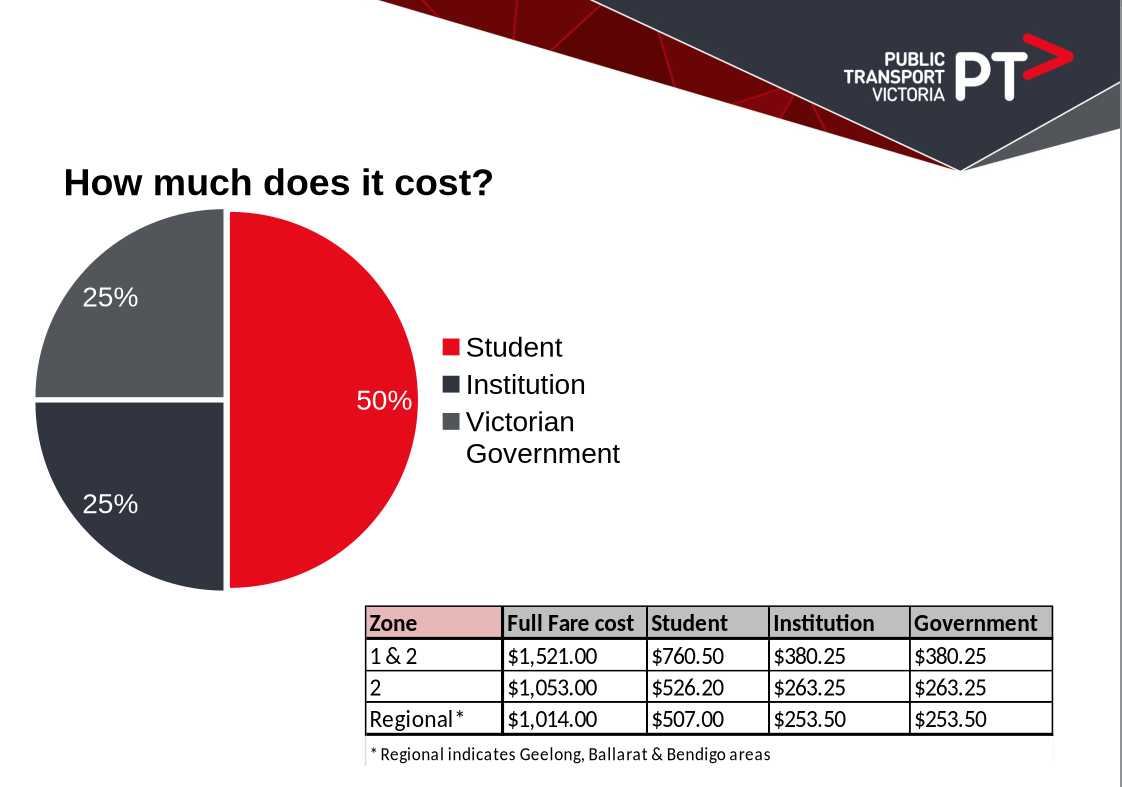
However this co-funding model also means that institutions can unilaterally end their subsidies, which has happened recently, with RMIT University pulling out of the scheme in January 2025, forcing international students at that institution to utilise full-fare mykis.
Child and Youth mykis, what’s the difference?
Before the Youth mykis came into effect at the start of the year, young people under the age of 19 were entitled to 50% concessions under the “Child” myki type. While the youth myki has in theory, ‘superseded’ the Child myki, it actually still exists as a card that one can still buy.
The official communication from Transport Victoria, as well as on the ticketing manual, implies a progression of holding a Youth myki until the age of 18, a child myki from 18-19 years old, and a full-fare myki from then onwards. Sounds all well and good doesn’t it?
Another factor that isn’t considered is the confusion that it may generate from passengers, especially family tourists and those who are using the public transport system in Victoria for the first time - that aren’t aware of the two co-existing myki types. While the Youth myki can be bought at staffed stations and online, a Child myki can be bought at myki machines - and the messaging on this dichotomy isn’t exactly clear-cut.
Conclusion - What should we do instead?
The messaging on concessions isn’t clear, and the system itself is designed against young people - particularly those who weren’t blessed with the luck of the draw by being born in Victoria. The Victorian Government and the Department of Transport should consider streamlining concessions - to have one myki for each concession type. Make the myki upgrade worthwhile, and make it simple for everyone to take up public transport. As for yourself, the reader - join any local public transport advocacy group, such as the Student Transport Riders Association or the Public Transport Users Association, and make sure to push the issue of having a single concession for students, seniors and young people.